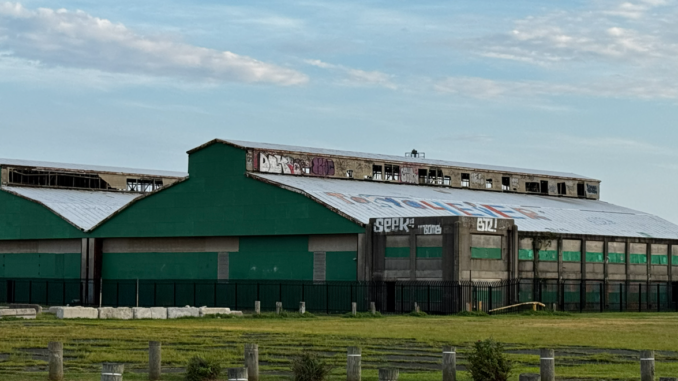
If you love graffiti, and history, and the beach — then head on over to Miller Field in New Dorp, Staten Island for a heaping helping of all 3!
Miller Field is a former airport that was once part of the Cornelius Vanderbilt estate — one of his properties that was used as a farm in the 1800’s. It was later purchased by the US Government for $100,000 in 2017, and made into a military Air base.
In the 1920’s, such air luminaries as Charles Lindbergh and Robert Byrd flew in and out of Miller Field — Byrd testing his Trimotor plane before his first landmark journey to Antarctica.
Today, the field is a Federal park — part of the Gateway National Park system. Where there was once a farm, and later an airfield, there are now soccer fields and baseball/softball fields.
Remnants of the Air base remain: one of hangers — known as Hanger 38; a lighthouse beacon; and an observation post built in World War II.
Here is the story of Miller Field:
1. Started as a Cornelius Vanderbilt Estate
As most Staten Islanders know, Cornelius Vanderbilt was the richest man in the world in the early to mid 1800’s — and he built his business and his fame on Staten Island, starting with a ferry service then expanding into railroads.
Vanderbilt had several estates on Staten Island — including a mansion in Stapleton. In 1836 he began purchasing farmland in New Dorp and owned all of what would become Miller Field by 1843.
His eldest son William, disparaged as incapable by his powerful father, fell ill while clerking on Wall Street, and moved to the farm on Staten Island to recuperate. His management of the land so impressed his father Cornelius that he was given an increasingly larger role in the family business.
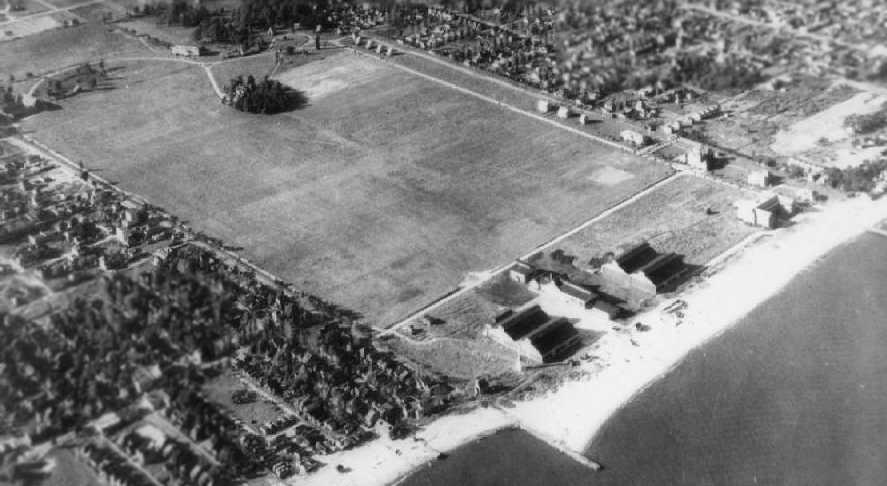
William later transferred the property to his son, George Washington Vanderbilt in 1885. George used the property as his estate, and built a 24 room “White House” at the center of the field.
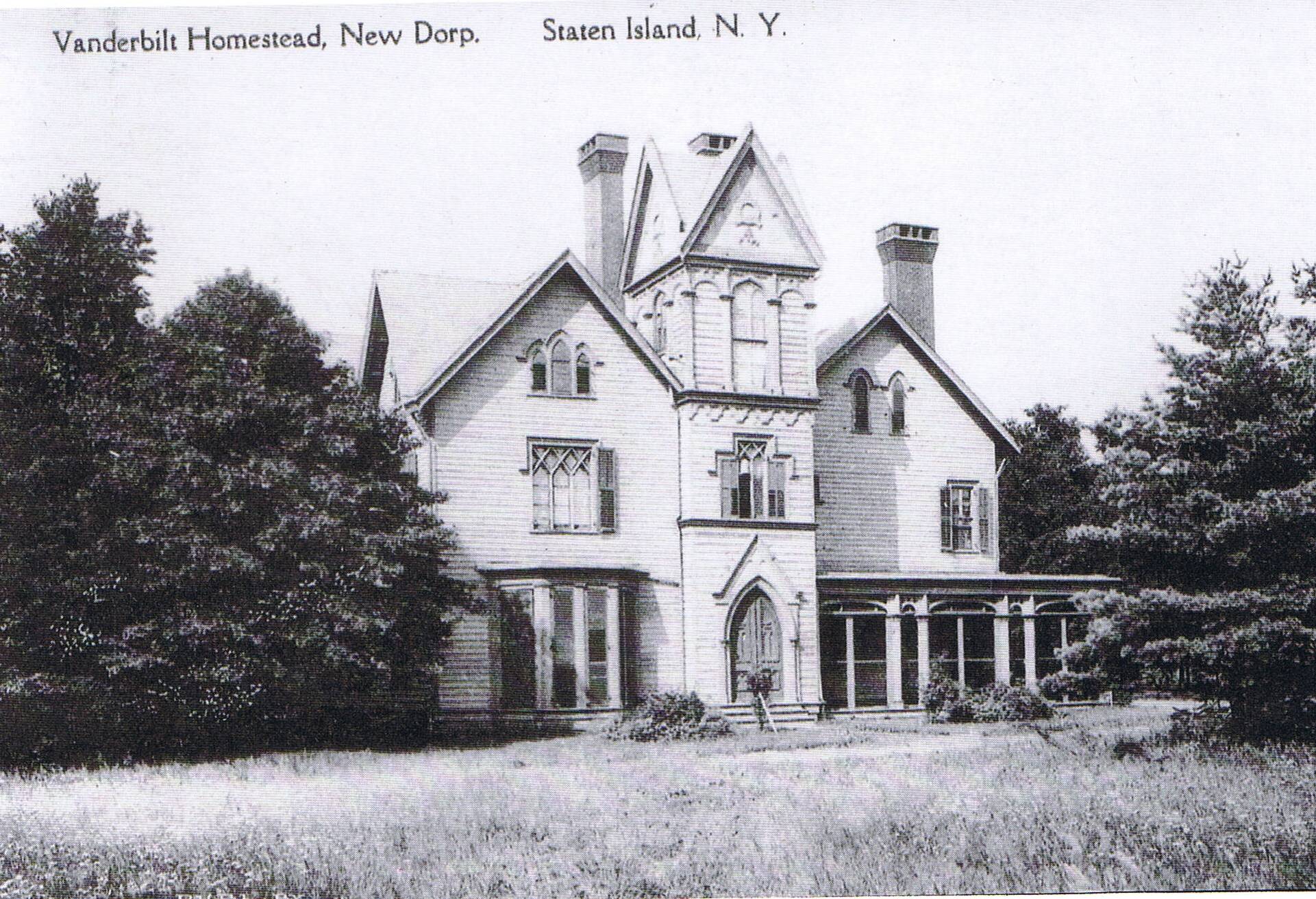
George Washington Vanderbilt later built the Biltmore estate in North Carolina — which still today houses the largest home in the United States. George also stayed at the “White House” periodically until he passed away in 1914.
The Vanderbilt’s also built a75-foot-high observation tower on Miller Field, with a gazebo at the top, and a kitchen for the servants to make lunch. The stone tower also held the water supply for the estate.
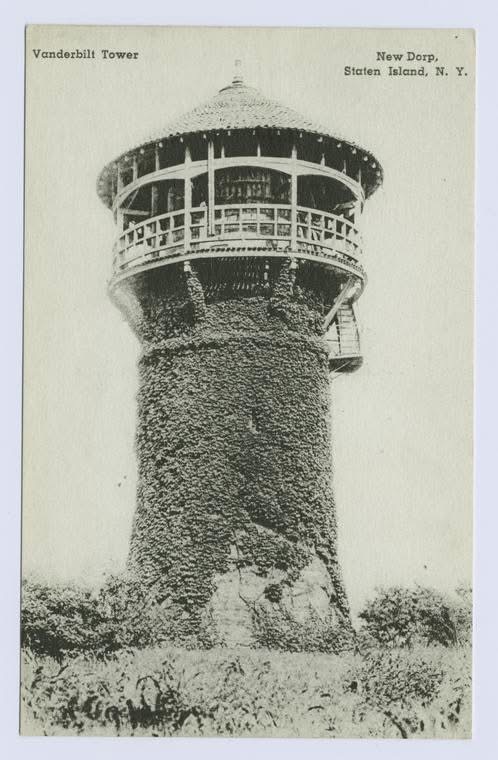
The Vanderbilt observation tower was demolished by WPA workers in January 1936 — to great relief for the pilots of the 27 Division Aviaton, New York National Guard, according to Ed Drury in his book, Staten Island — the Other Cradle of Aviation. In the book, Drury writes that “Tom Andrews, who lived adjacent to Miller Field for most of his life, remembers the Army blowing up the Vanderbilt Tower. Even though it was a WPA project, the Army did the explosive demolition. Despite all the precautions the blast managed to toss a stone block over a mile and maim a soldier. The tower had stood for over 50 years and the walls were several feet thick.”
2. Purchased by US Government for a Military Airfield
As the United States became involved in World War I, the the Secretary of War approved the creation of aeronautical coastal defense stations in 1918, and Congress appropriated funds for construction of 8 — of which only Miller Field on the East Coast and Chrissy Field on the West Coast were built.
The US Government purchased the farm from the Vanderbilt family in 1919 and built a military airfield there. It was operational by 1921. It had:
- 2 grass runways, troop housing,
- 2 standard aircraft hangars,
- 2 seaplane hangars, and
- A seaplane ramp that allowed the planes to launch from Lower Bay.
One of the 2 seaplane hangers — named Hanger 38 — still stands (see below).
The New York National Guard’s 102nd Observation Squadron became the first air unit stationed at Miller Field — and it was there from 1923 to 1940. In this mission, it helped defend New York Harbor along with the Coast Artillery Corps.
Throughout its life, Miller Field was used alternately as a US Army Air Force base and US Army National Guard facility.
Later on, the following was added to Miller Field:
- In 1939, the Elm Tree lighthouse was replaced by a concrete structure with a beacon at the top. It still stands (see below).
- In World War II, a pillbox observation tower was built. It still stands (see below).
3. Named After James Ely Miller — 1st US Pilot Killed in WW I
Upon its opening the field was named for Captain James Ely Miller — the 1st US pilot killed in World War I.
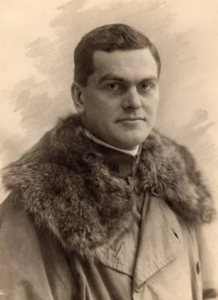
Captain James Ely Miller was born in New York City on March 14, 1883, to a wealthy banking family. He attended Yale University where he became a “Bonesman” in the Skull and Bones society, and participated in the University crew, and football teams.
He graduated from Yale in 1904 with highest honors and began working at the Knickerbocker Trust Company, one of the largest banks in American history in the 1900’s. He didn’t just work there — he was secretary of the company. He married Gladys Godfrey Kissel on April 2, 1908. Miller then became Vice President of the Columbia Trust Company in 1912.
As airplanes became THE hot and adventurous thing to do at that time, and at the same time World War I broke out in Europe — the US Government began training people to fly. Miller volunteered for the National Guard in 1915 and learned to fly at the Plattsburg Training Camp near Lake Saranac, NY — becoming a pilot and an instructor. Miller helped organize the 1st Aero Company of the New York Army National Guard.
When the United States entered World War I by declaring war on Germany in 1917, Miller’s unit entered the war, initially as part of the US Signal Corps. Miller soon rose to captain, and joined General John Pershing’s staff in France. Miller was then appointed to the command of the 3rd Aviation Instruction Center, at Issoudon, France.
Captain Miller was charged with creating an American flying school within 60 days. He did so and met his deadline — getting the base up and running with barracks, hangars and other facilities. The 3rd Aviation Instruction Center became one of the most important flight training centers during World War I — and eventually developed into the largest flying training center in the world.
Moreover, the 3rd Air Instructional Center at Issodun played the founding role in all aviation instruction that would follow. According to the Air & Space Museum, “The adoption of progressive learning techniques from the simple to the complex laid the foundation on which all that would follow was built. Miller, as the first commander of the 3rd AIC, began the process of aviation training still in use today and deserves his place in history for laying the cornerstone.”
The Story of How James Ely Miller Was Killed in Action
After standing up the Issoudon training center, Captain Miller attended the French Aerial Gunnery School in Cazaux and completed the course to qualify himself for Aerial Combat. According to (slightly conflicting) accounts by the National Park Service and This Day in Aviation:
- Miller eventually obtained a transfer to a frontline combat unit, the 95th Aero Squadron, based at Villeneuve-les-Vertus, France, and arrived there on March 8, 1918. There he became commanding officer, 95th Aero Squadron, 1st Pursuit Group, American Expeditionary Force.
- Though the unit had received their aircraft, the planes were not yet armed with machine guns, so could not engage the enemy.
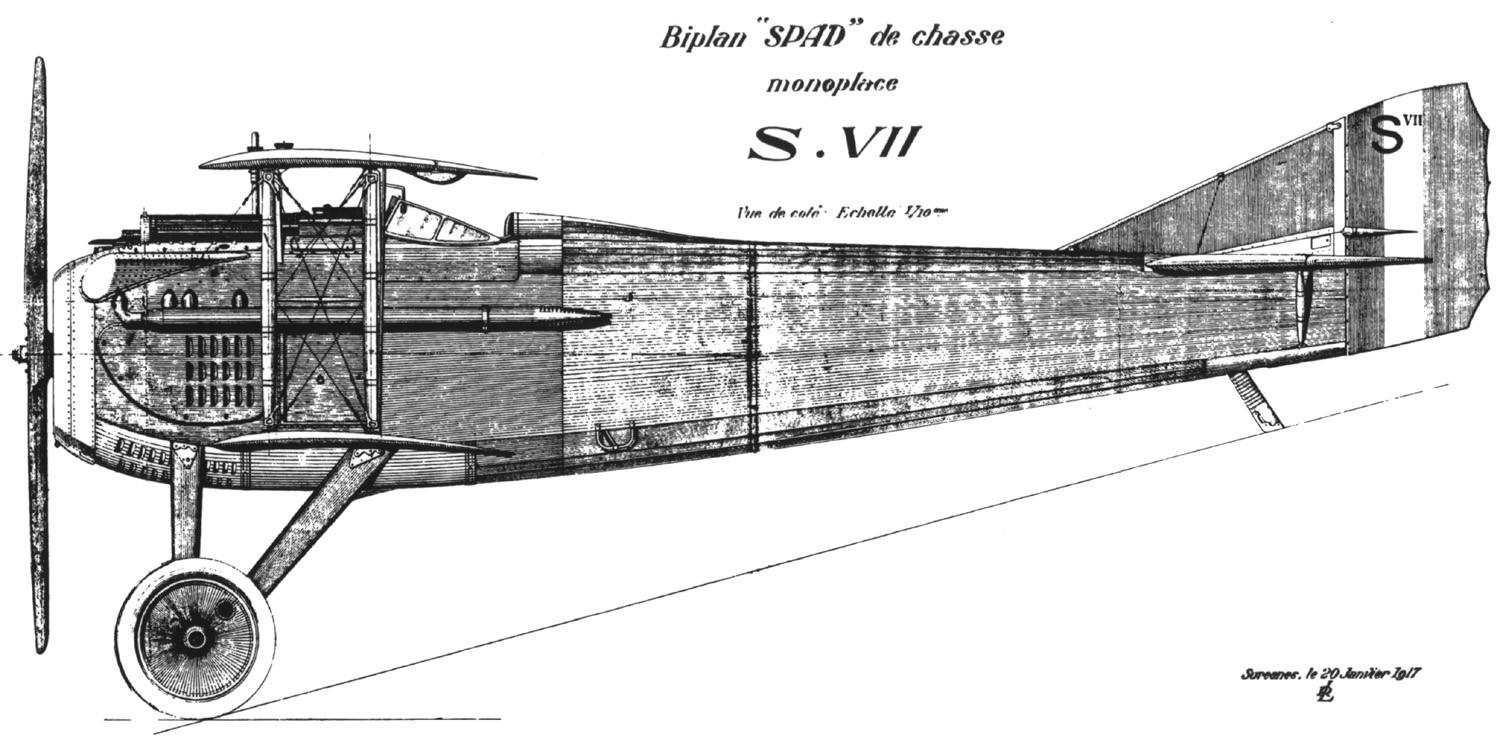
- However — the next day — on March 9, 2018 — Captain Miller was invited by Major Davenport Johnson to join him and Major Harmon of the 94th Squadron for a short patrol over the lines in three SPAD S.VII C.1 fighters borrowed from a French squadron. Captain Miller accepted the invite and flew into action.
- Harmon returned to base due to engine problems, while Major Johnson and Captain Miller continued to fly to the front.
- They were initially engaged by two German fighters, but managed to chase them away.
- They then encountered four German fighters near Juvincourt-et-Damary in northern France. Shortly after the air battle began, Major Johnson abandoned the fight because his guns jammed, leaving Captain Miller on his own. Captain Miller was shot down near Corbény, France.
- The German pilot who downed Miller and a German intelligence officer who had rushed to the crash scene witnessed Captain Miller’s dying words in which he cursed Major Davenport Johnson for leaving him during the air battle.
- As a prisoner of war, Captain Miller soon expired from his wounds. He was 34 years old.
- Captain Miller is buried in Ainse, France. He was posthumously awarded the very first Distinguished Flying Cross ever presented, and also was eligible for the first Purple Heart. Both were awarded to his family in June 2017.
4. Miller Field Used by Charles Lindbergh & Admiral Byrd
According to Ed Drury in his book Staten Island — the Other Cradle of Aviation, “Miller Field was to be the departure site for Charles Lindbergh’s transatlantic flight; however the politics of the time made this impractical. Lindbergh did land there often, but not for his overseas flight.”
Drury, who passed in June 2026, was an avid flier and owner of a 6-passenger Cessna Skymaster. He began flying in the 1960’s — out of Miller Field. He got his aviation bones from his father, who was an avid flyer on Staten Island back in the 1920’s. Drury knew and his father John Drury knew ‘everyone’ associated with flying through the years on Staten Island, and beyond that did intensive research for the book — listed in its appendices — and credits 29 people for their help and information.
Admiral Byrd Tested His TriMotor Plane Before Famous Flights to Antarctica
“Admiral Richard Byrd also landed at Miller Field and used it as a staging area for his polar flights,” adds Drury. “Both Byrd and Floyd Bennett were regular visitors to Staten Island and were often seen in the local restaurants and became well known to the locals.”
On May 9, 1926, Admiral Byrd became the 1st man to fly over the North Pole in the Arctic. He flew in a a Fokker trimotor monoplane named the Josephine Ford. It was built by the Dutch aircraft manufacturer Fokker, and privately funded by Edsel Ford, John D. Rockefeller, Vincent Astor, and others. It was named after Edsel Ford’s daughter.
Byrd’s co-pilot was Floyd Bennett.
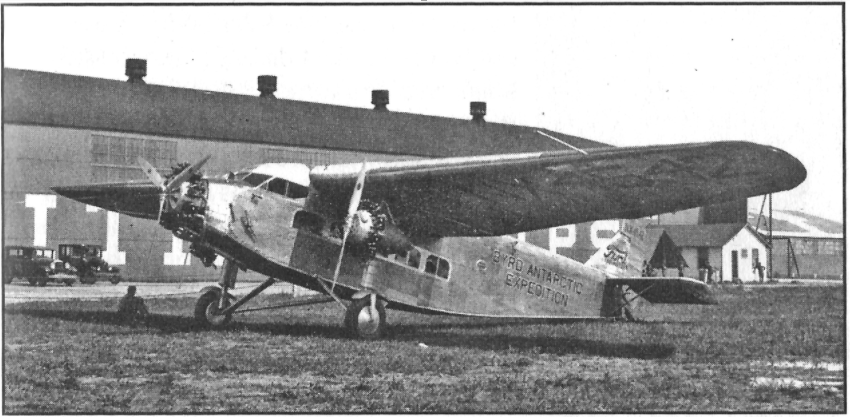
In 1929, Byrd flew a Ford 4‑AT‑B Tri‑Motor airplane over the South Pole in Antarctica. He named the plane the Floyd Bennett, who had died of pneumonia during a separate expedition and rescue operation in 1928.
The Ford Trimotor was an American-built version of the Dutch Fokker F.VIII trimotor plane, chosen for its durability, 3 Wright Whirlwind engines, and ability to handle rough conditions.
What Byrd Tested at Miller Field
Before the flight over the South Pole, Byrd conducted many tests on the trimotor plane — including all of its instrumentation, and critical weight‑reduction tests to ensure the aircraft could clear the “Hump” — the ice‑covered pass over the Queen Maud Mountains that blocked the route to the South Pole.
Miller Field Used for Civil Aviation as Well As Military
Drury notes that “Civil aviation was allowed to use the field on and off during its operational life.” This was true from the 1920’s onward — but especially true after 1960. As Drury puts it, “after all the commercial airports on Staten Island closed, local pilots soon learned that by joining the Civil Air Patrol (CAP) they could base their planes at Miller Field. Staten Island pilots flocked in droves to join the CAP.”
Drury adds: “The commander of the Civil Air Patrol at the facility was Colonel “Tex” Rice. Colonel Rice only had the use of one eye and one arm, yet he flew a Piper Cub flawlessly.”
“I flew out of Miller Field with my father in the early 1960’s,” writes Drury. “He belonged to the Civil Air Patrol and based his 1950 Cessna Model 190 there. This aircraft was a 5-seat, strutless monoplane, powered by a Continental 240 horsepower radial engine.”
5. Other Famed (& Infamous) Aviation Events at Miller Field
In July 1920, the US Army took commercial photographers to the sky to take ariel photographs and film of the International Cup yacht races. Newspapers were able to obtain the photographs at Miller Field — the first time such an immediate use of photography occurred.
The Horrific Mid-Air Collision
On December 16, 1960, two commercial airliners collided in mid-air over Staten Island, just west of Miller Field. A Lockheed Super Constellation (United Airlines Flight 826) collided with a Douglas DC-8 (Trans World Airlines Flight 266). The Constellation broke into 3 major pieces and many smaller pieces — mostly falling on the northwest corner of Miller Field and some on residential property. All 45 people on board died. The DC-8 crashed into Park Slope, Brooklyn. All 128 people on board died.
The collision was the world’s worst airline disaster to that point in time.
Army Helicopters and Planes
In the 1950’s and 1960’s, the Army had helicopters and planes at the base. Staten Islanders would frequently see them taking off and landing.
Nike Missiles
In the 1950’s, Miller Field was home to the 1st Army Aircraft Field Maintenance Unit. This unit consisted of mostly civilian employees that serviced Nike missiles, which were brought in and out of the base. Ed Drury writes, “I remember, as a child, seeing the huge (to a small boy) missiles being trucked in and out of the facility.”
The Green Berets Trained Here
In the 1960’s, Green Beret units trained at Miller Field.
6. The Seaplane Hangars — Hangar 38
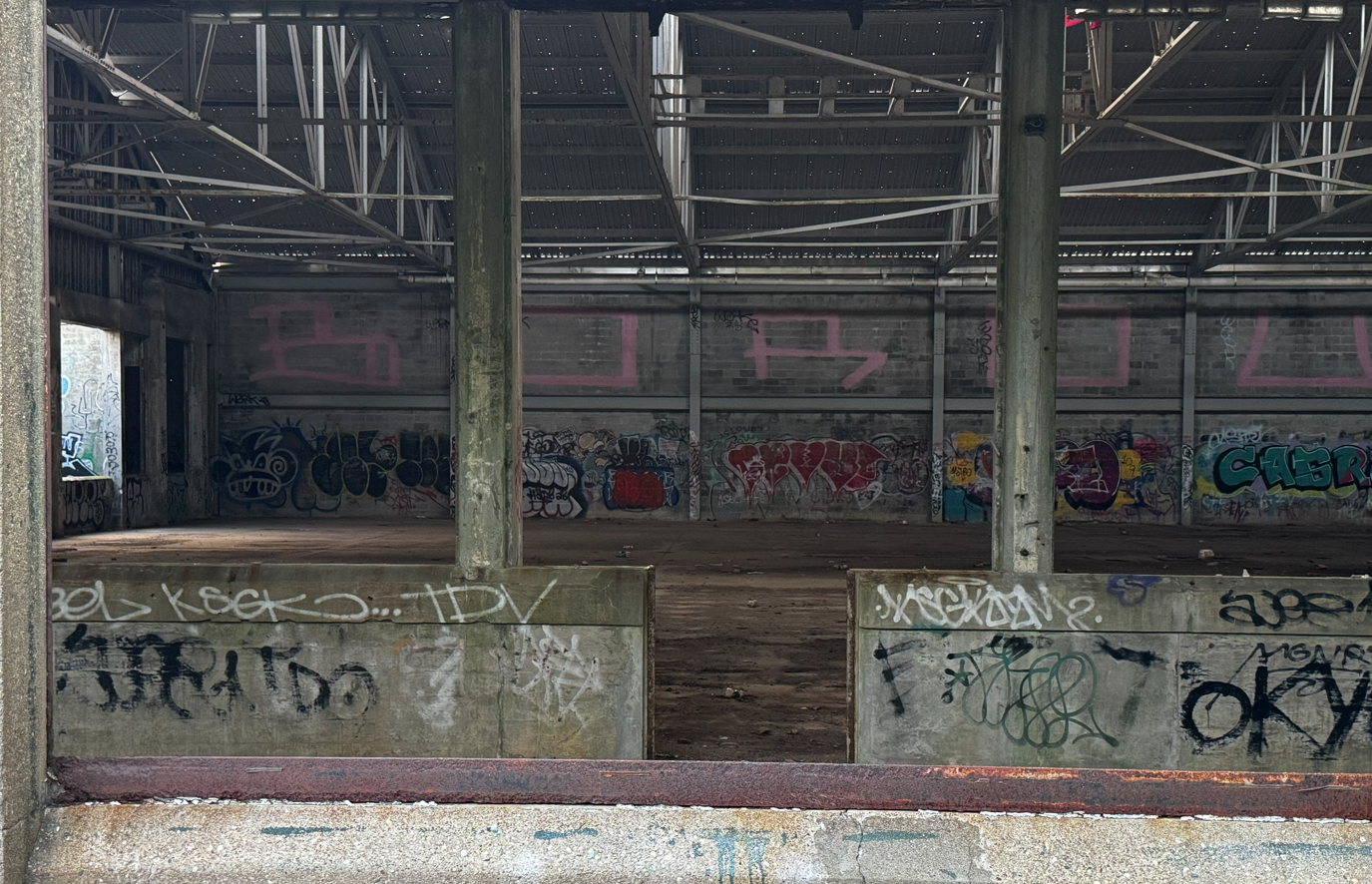
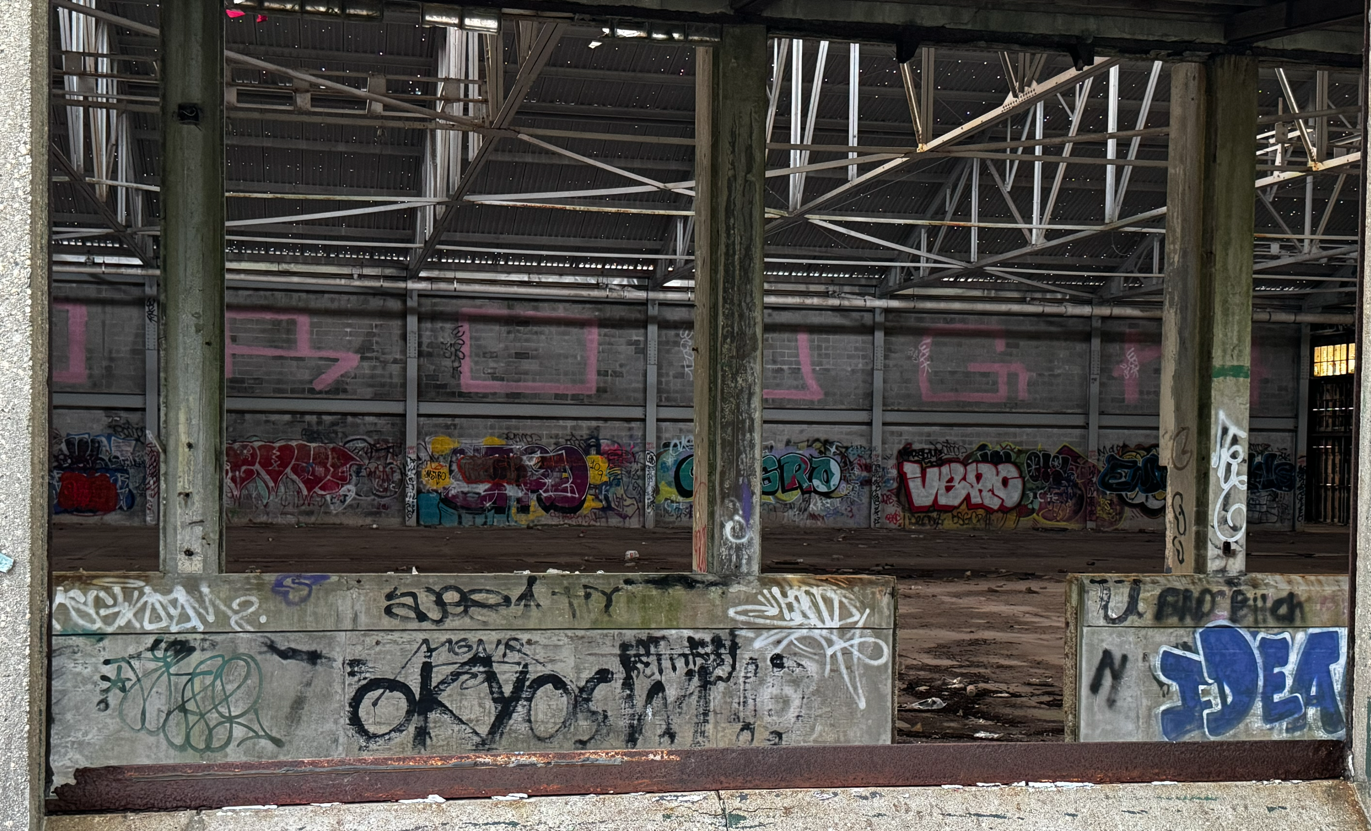
The seaplane hangars — named collectively Hangar 38 — still exist at Miller Field. The standard aircraft hangars were located on the opposite side of the concrete apron from the seaplane hangars. These were in such poor condition when the National Park Service took over Miller Field that they were torn down in 1976.
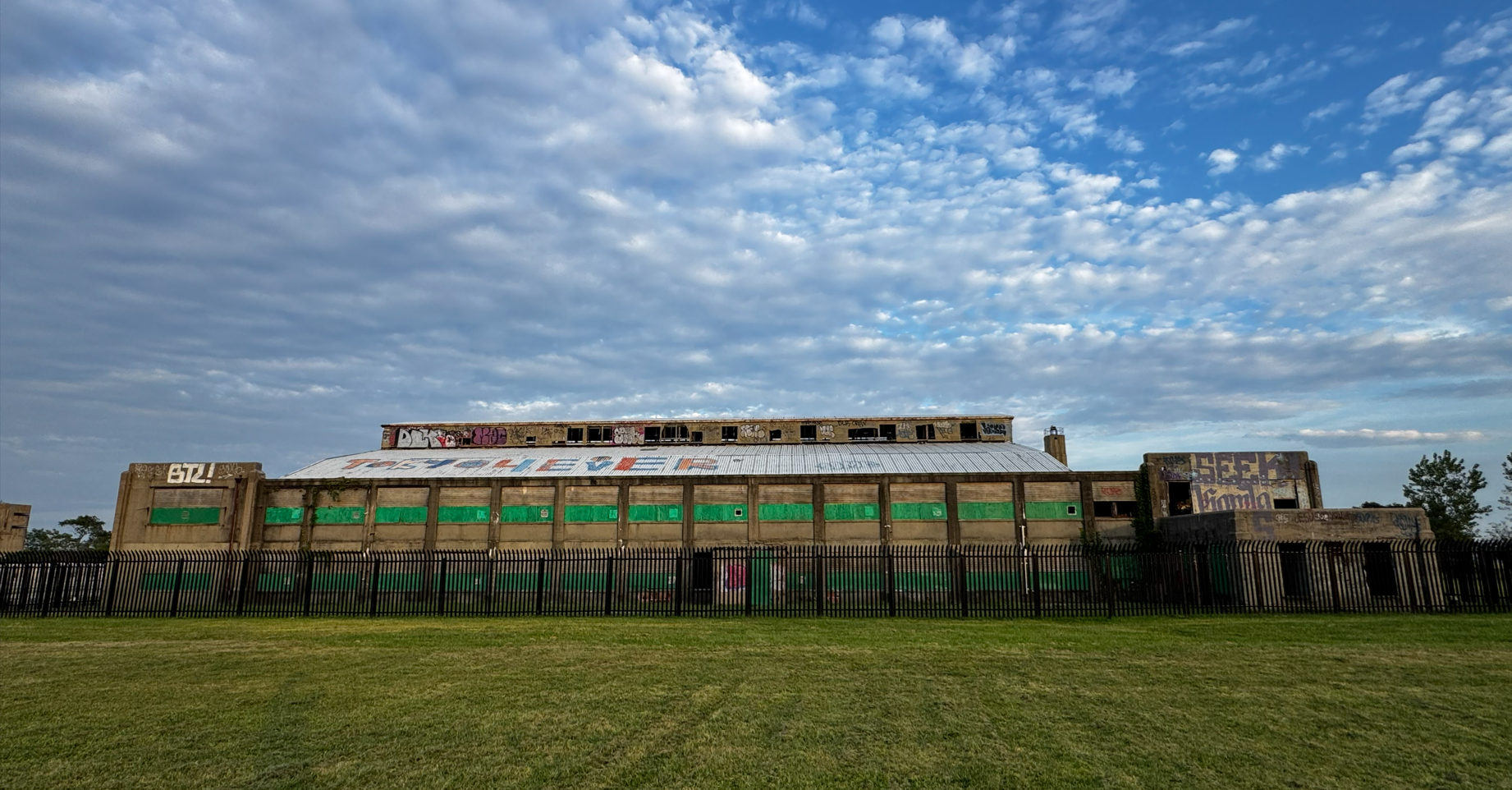
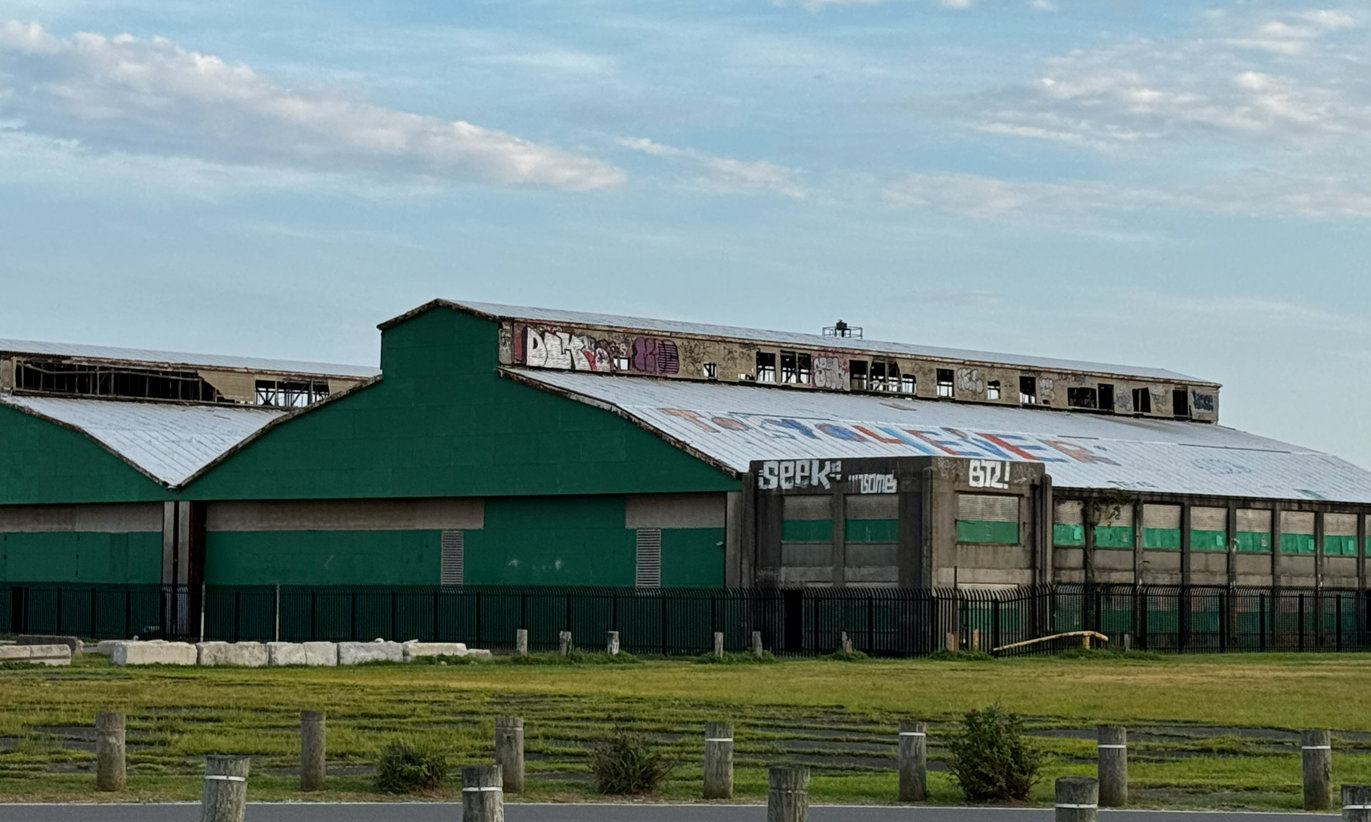
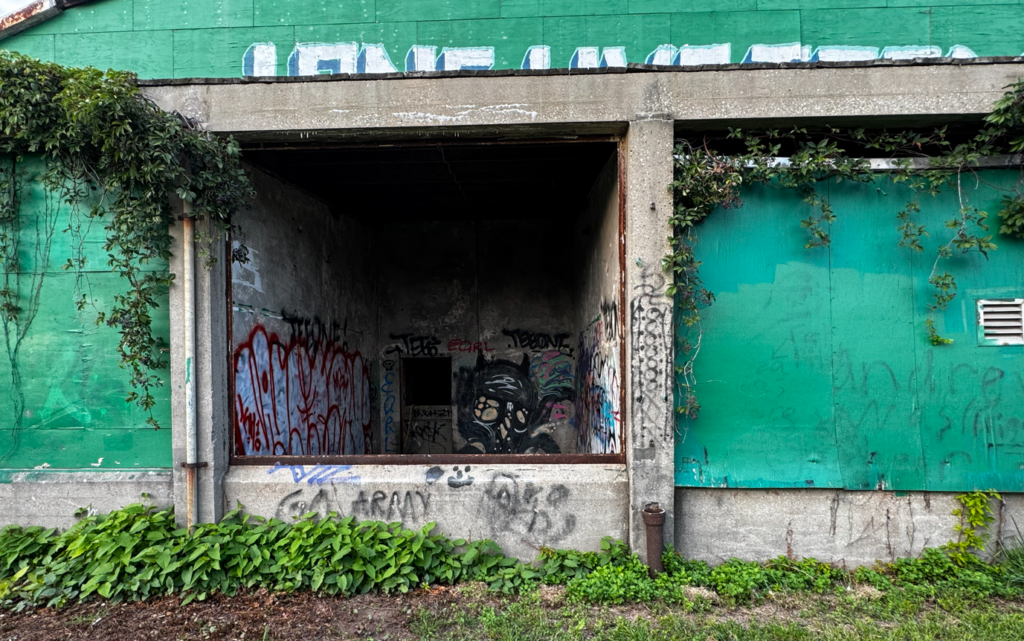
Seaplane Hangar 38 has a distinctive double-bay configuration, and its steel-frame, cast-in-place-concrete structure, with terra-cotta structural tile curtain walls, and gambrel roof is an early example of hangar technology.
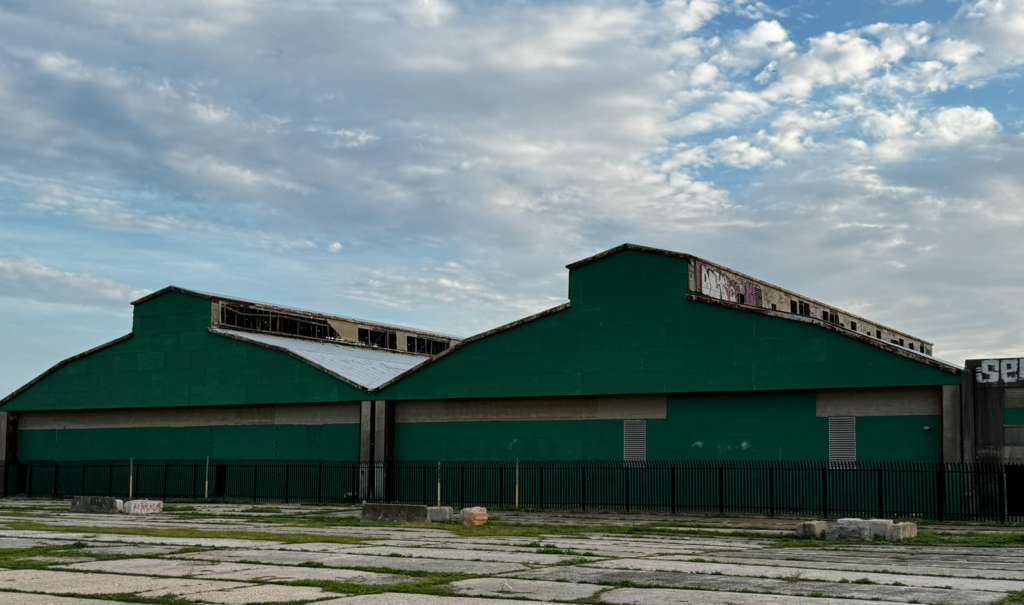
Hangar 38 took a hit with Hurricane Sandy in 2011, deteriorating its condition. In 2016, the National Park Service floated the idea of having the sides of the hangars removed, leaving only the structural frame and roof to cover a recreational facility, such as a skate park. However, in the early 2020s, hazardous materials were found, and all funds for the renovation were spent on their removal. As of 2025, there is no more money to complete the renovation.
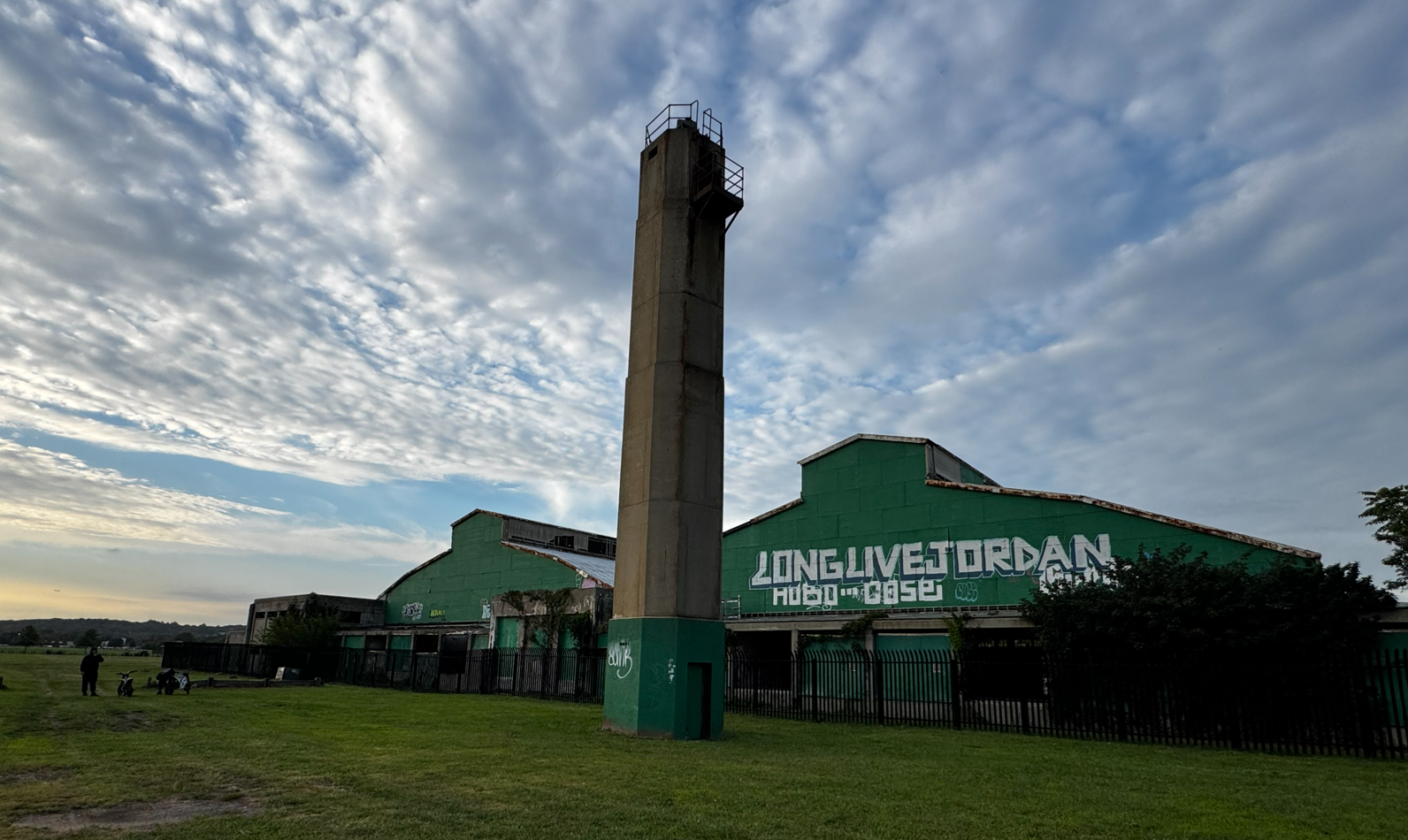
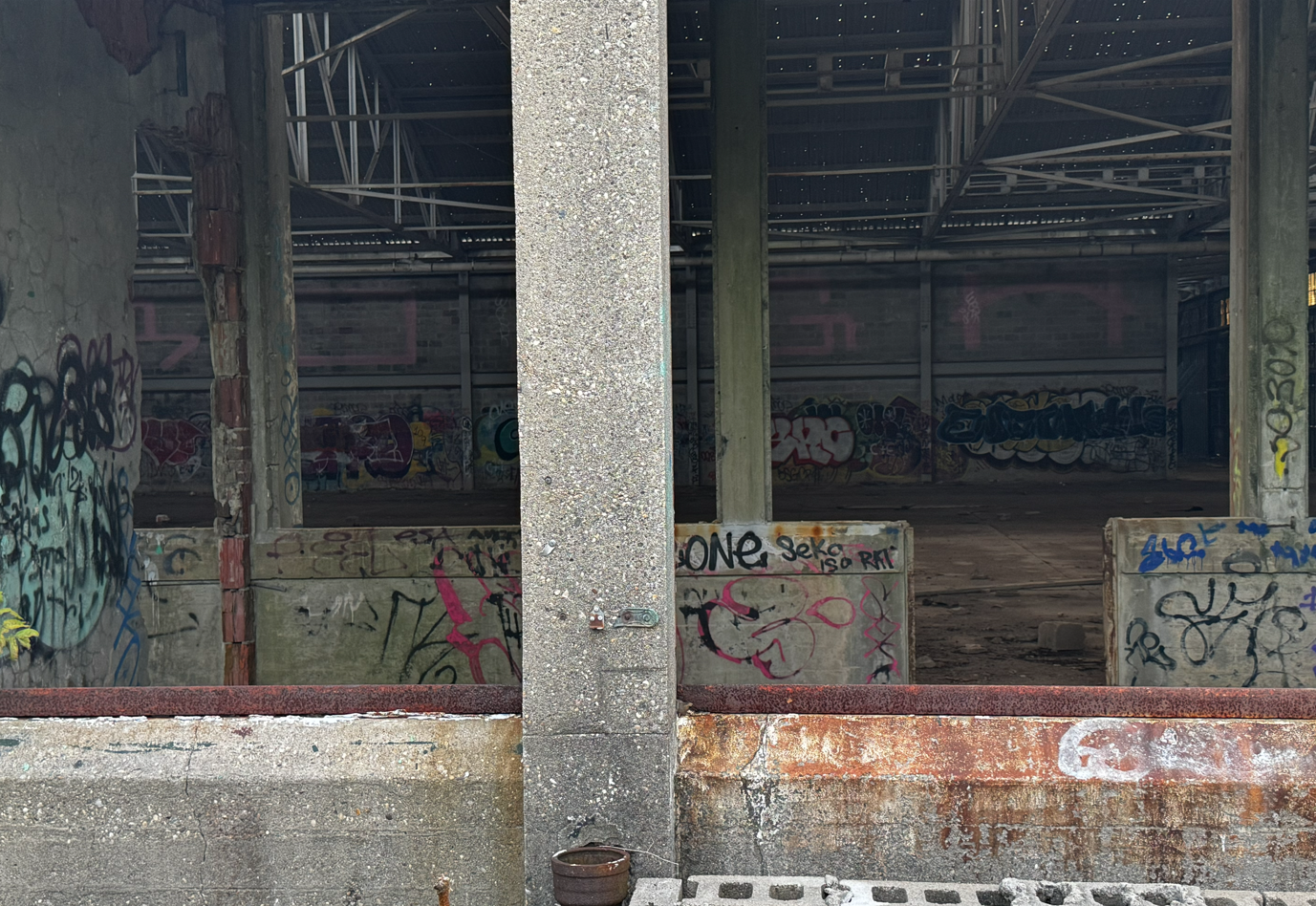
Graffiti artists have added amazing new texture to the amazing Seaplane Hangar — inside and out.
7. The Elm Tree Beacon
In the early 1800’s, sailors used a prominent elm tree near the site to navigate. In 1836 the elm tree was replaced by a lighthouse with wooden frame construction. It was named the Elm Tree Lighthouse. It stood until 1924, when it was abandoned after the shifting channel course rendered the lighthouse obsolete.
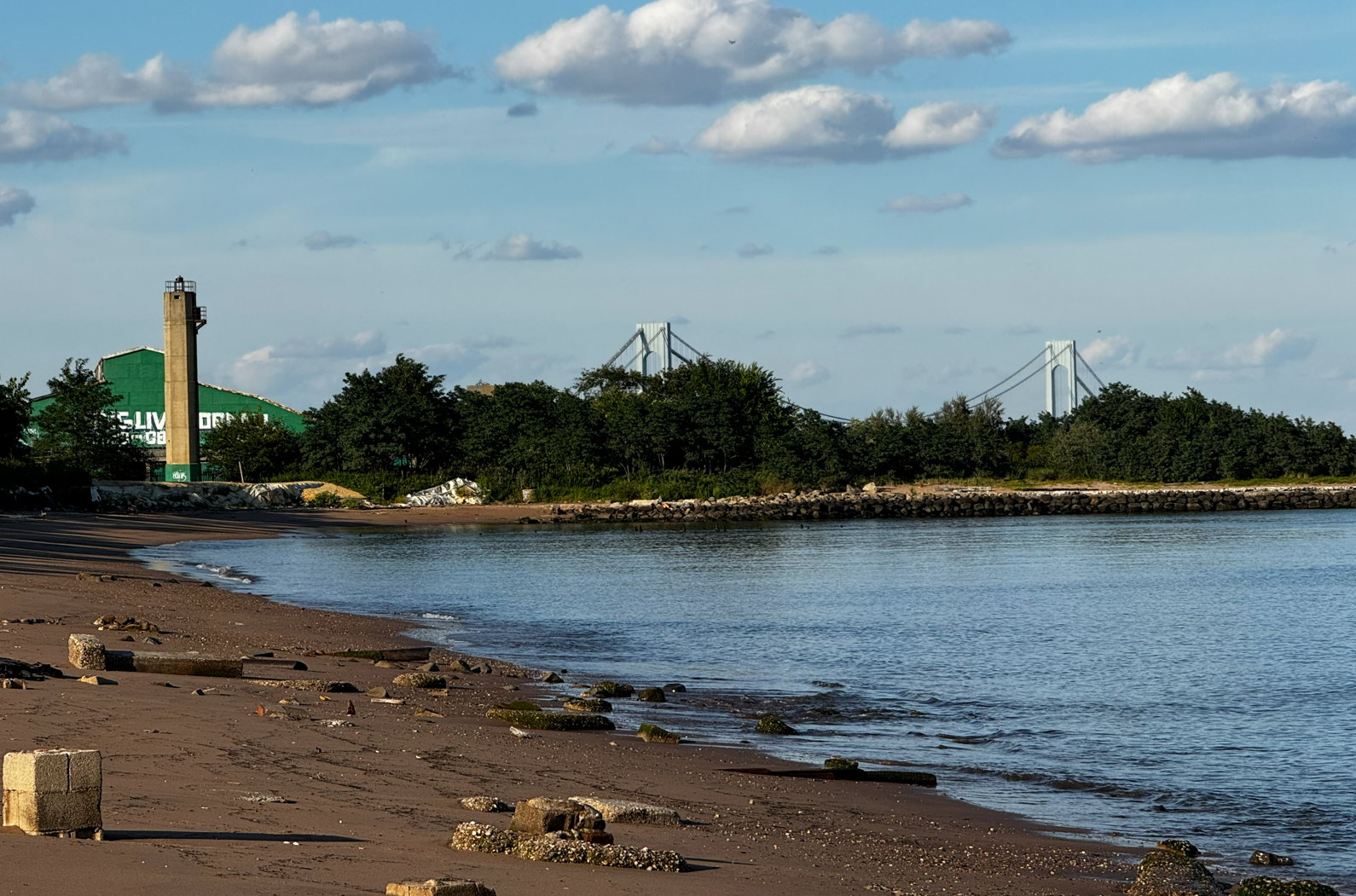
The lighthouse was replaced in 1939 by a 65-foot high, concrete tower with beacon at the top, named the Elm Tree Beacon Light. It initially served as a lighthouse tower and then functioned as a fire control watchtower in World War II — where “fire control” means aiming and firing weapons; spotting enemy ships and directing artillery at them from local batteries.
The Elm Tree Beacon Light remained operational until 1964. If you look closely, you can still see a light on the top.
8. The Pillbox Observation Tower
During World War II, Miller Field became part of Fort Wadsworth. Coastal artillery was installed and a concrete observation tower was built, with slats that observers could see out of (and possibly even shoot out of). The narrow slats make it difficult for bullets to easily get inside. The tower stands today.
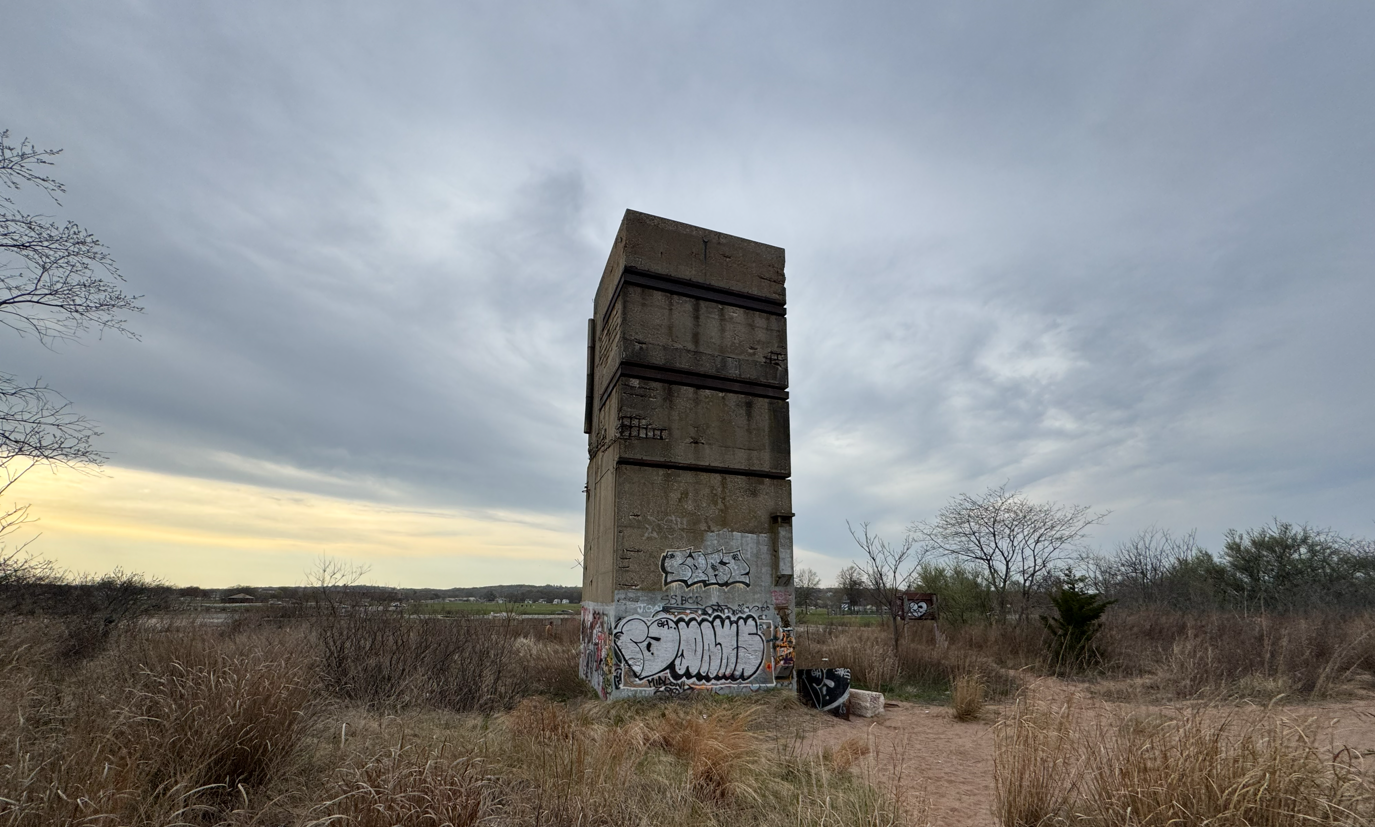
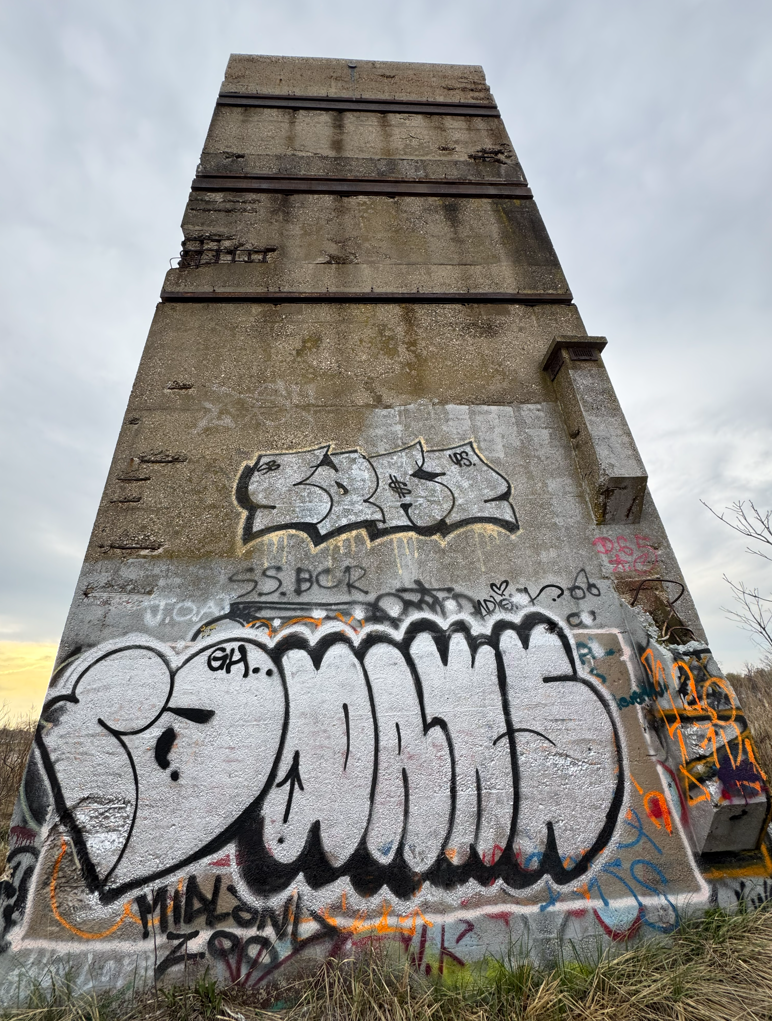
The only other remnants from the military days of Miller Field are a dozen or so Officer Houses located at the northwest end of the park (on the Hylan Blvd side of the park). These are now occupied by National Park Service staff.
9. The Graffiti
According to StreetArtNYC’s 2026 “Pushing It Forward” series, some of the most visible and respected graffiti artists active on Staten Island include:
- Goal GOMD – a Staten Island veteran known for versatile, high‑impact pieces.
- Veng – a creative, adaptable writer with a distinctive style.
- TRAP.IF – part of the GI crew, prolific and active in the borough.
- Vew – a collaborator within the TRAP.IF collective.
- Endem – a New York City–based artist from Los Angeles, recognized for bold, stylized work.
- Mepz2 – a Staten Island–based writer with a growing reputation.
- Bezt – a busy, versatile artist from Massachusetts.
- Blea – known for playful, stylish pieces.
- Torx – a playfully creative writer with a unique visual identity.
It’s hard to say which, if any, of these artists have added their art to Hangar 38 at Miller Field — and if they haven’t at this writing, whether they will the day after tomorrow as Hangar 38 is an active pallet. The task remains to examine the graffiti at Hangar 38 and see who did it. There is some amazing art there.
The Future
It is uncertain what the National Park Service will do with Hangar 38, the Beacon Light, and the Observation Tower. Hopefully they remain in tact, graffiti and all. As mentioned above, in 2016 the National Park Service floated the idea of having the sides of the hangars removed, leaving only the structural frame and roof to cover a recreational facility, such as a skate park. But in the early 2020s, hazardous materials were found, and all funds for the renovation were spent on their removal. At this writing, there is no more money to complete the renovation. And that is a good thing if you didn’t like what they planned to do.
Maybe President Donald Trump can come to the rescue at some point.
Other Sources
National Park Service — Plans for Miller Field
National Park Service — Ideas for the Future of Miller Field
National Park Service Virtual Tour of Miller Field
National Park Service History of Miller Field
Wikipedia Entry for Miller Field
Air & Space Museum — James Ely Miller
National Park Service — James Ely Miller
Be the first to comment